Thursday, November 6, 2014

Outsourcing

Subject:  Is Outsourcing a Wise Corporate Strategy?


        Outsourcing is defined as a “practice used by different companies to reduce cost by transferring portions of work to outside suppliers rather than completing it internally”(Outsourcing).  As companies continue to use outsourcing as a means for profit, issues involving offshore working conditions and job loss in the Unites Sates arise.  However, outsourcing can also be a great aid to US companies by cutting costs of raw materials and labor, while also benefiting workers by paying them at rates above minimum wage.
        Although outsourcing focuses on bringing jobs to other countries, the negative effects are not only felt offshore but also right in our own backyards.  During the 2000’s many “US multinational corporations…shifted millions of jobs overseas” (Lach).  Since “the big brand-name companies that employ a fifth of all American workers…” sent jobs elsewhere, they were forced to cut jobs here in America.  The companies “cut their work forces in the US by 2.9 million…increasing employment overseas by 2.4 million”(Lach). However, the conditions in which these people work can sometimes be extremely poor.  Employees from Foxconn, one of the world’s largest electronic outsourcing manufacturers, saw suicide as their only way to cope with stress due to poor working conditions (Chan).  The employees had to “work overtime …to meet basic needs,” “live in small dormitories with up to 10 people a room,” and experience “…daily humiliation, stress, and alienation”(Chan).  These impediments caused around 13 workers to “jump from buildings…”(Chan).
        Even though there is a downside to outsourcing, U.S companies are finding ways to benefit from this trend.  In late January, Nokia decided to “outsource the IT function to Indian technology firms TCS and HCL Technologies…”(Nokia).  Nokia is doing so because it believes that “these changes will increase operational efficiency and reduce operating costs…” therefore creating a better more organized IT segment (Nokia).  When looking abroad sweatshops are sometimes welcomed.  According to a Kenyan woman who studies trade policy, “when there’s a new company opening a factory…people are excited about it”(John).  Also, “[she] wishes we could have more “sweatshops” in [her] country” because the “sweatshops pay twice of what local factories pay”(John).  Therefore, it is clear that outsourcing can also have positive effects on the off shore countries, and the conditions aren’t always sub-par.
           When comparing both sides of the outsourcing argument, there are definitely definitive and reasonable conclusions to both.  In order to come up with an agreement to please both sides, companies who outsource must follow the lead of Nike.  In the 1990’s it appeared Nike tarnished its reputation when it was leaked that the company was “subverting minimum wage laws in Indonesia”(Blog).  Although the company tried ignoring the issue, CEO Phil Knight did not want the Nike name to “become synonymous with slave wages, forced overtime…arbitrary abuse”(Blog).  He announced that Nike would “implement a more rigorous social auditing regime and extend U.S. operating rules and processes to its overseas contractors”(Blog).  This is exactly what needs to be done for all companies who outsource overseas.  All overseas factories under the control of a US company must ensure that the conditions, rules, and processes adhere to the same guidelines that are in place in the US.
Works Cited
Blog, The CSR. "The Parents Of CSR: Nike And Kathie Lee Gifford." Forbes. Forbes
            Magazine, 08 June 2010. Web. 23 Feb. 2013.
            <http://www.forbes.com/sites/csr/2010/06/08/the-parents-of-csr-nike-and-kathie-
            lee-gifford/>.


Chan, John. "World Socialist Web Site." Foxconn Suicides Highlight China's Sweatshop
            Conditions -. N.p., 3 June 2010. Web. 23 Feb. 2013.
            <http://www.wsws.org/en/articles/2010/06/foxc-j03.html>.

"John Stossel ABC News: Are Sweatshops Factories Good?" YouTube. YouTube, 14
            Mar. 2009. Web. 23 Feb. 2013.
            <http://www.youtube.com/watch?v=JqtS3sFVy7s>.


Lach, Alex. "5 Facts About Overseas Outsourcing." 5 Facts about Overseas
            Outsourcing. N.p., 09 July 12. Web. 23 Feb. 2013.
            <http://www.americanprogress.org/issues/labor/news/2012/07/09/11898/5-facts-
            about-overseas-outsourcing/>.

"Nokia Cuts 300 Jobs; to Outsource 800 Staff to TCS, HCL Tech." Nokia Cuts 300 Jobs;
            to Outsource 800 Staff to TCS, HCL Tech. N.p., 17 Jan. 2013. Web. 23 Feb. 2013.
            <http://zeenews.india.com/business/news/technology/nokia-cuts-300-jobs-to-
            outsource-800-staff-to-tcs-hcl-tech_68336.html>.

"Outsourcing." Definition. N.p., n.d. Web. 23 Feb. 2013.
            <http://www.investopedia.com/terms/o/outsourcing.asp>.


US CEO's

Subject:  Are US CEOs overpaid?


         A Chief Executive Officer (CEO) “is the highest ranking executive in a company…[who] manages the overall operations and resources of a company…acts as the main point of communication between the board of directors and the corporate operations” (A).  While a plethora of US companies are underperforming, it appears that the CEOs are continuing to receive inflated salaries and generous bonuses.  When analyzing the performance of organizations in the United States and when broadening our scope to the salary of the worldwide CEO, it is becoming increasingly more difficult to defend that the US CEO is solely responsible or entitled to the wealth he/she receives.
             There is quite a difference between and individual who merely runs a company and an individual who built his/her company from the ground up.  Ralph Lauren is a visionary who took his ideas and transformed them into a multi million- dollar organization.    Lauren believes that “it is not a race for what is next, rather, an appreciation of what has come before”, (B) instead of constantly looking ahead and wanting more he takes time to honor his predecessors and learn about what he needs to do to take the next step in his company.  His $66.7 million salary is well deserved due to his passion and dedication to the fashion industry and the 24,000 workers he employs worldwide (C).   Also, Oracle CEO Larry Ellison and Viacom CEO Philippe Dauman both earn over $30 million a year but shares in both companies have increased by over 60% in the last five years under the command of these gentleman (D).  The CEO deserves to be rewarded for the success of his/her company.
         When comparing the salaries and packages of the US CEO with those in other countries and evaluating who actually owns the organization, the wages of US CEOs do not seem just.  When Japan disclosed the average CEO salary for companies listed on their stock exchange in 2009, including bonuses, the total averaged $580,000, “about 16 times more than the typical Japanese worker” (E).  The average US CEO in 2009 made $3.5 million dollars, “319 times as much as the average American worker” (E).  There is no excuse for a margin this large.  Also, in 2011 the top US CEOs “got a collective pay raise of 16%” compared to “a 3% pay raise to the average American worker” (F). 
         An agreement of some sort is not only desperately needed but is essential if we want to please both the CEO and the average working class American.  Therefore, a binding say on pay mandate will be crucial to the issue at hand.  In the United States, shareholders have a non-binding vote on executive compensation.  Seeing as the board of directors is closely affiliated with the CEO, if the CEO demands a higher salary or greater bonuses, a non-binding mandate will hold little to no weight.  In Australia, under a 2011 Amendment to the Corporations act of 2001, “if at two meetings over 25% of shareholders vote against the directors’ remuneration package, …the company must convene a general meeting within 90 days in which all the directors in office at the time must stand down, but may stand for re-election” (G).  A mandate like this can definitely gain agreement from parties on both sides of the argument.  For one, working class Americans can feel more empowered because they now have an actual say in who stays in office and how much compensation he/she really deserves.  On the other hand, CEOs will benefit because they have clearer obligations; continuously increase the value of the company and please the shareholders, this will ensure their spot in the organization and certainly entitle a pay raise.       

Works Cited

(A)"Chief Executive Officer - CEO." Chief Executive Officer (CEO) Definition. N.p., n.d. Web. 11 Feb. 2013. <http://www.investopedia.com/terms/c/ceo.asp>.

(B) "Billionaire from the Bronx: How Ralph Lauren Achieved Success."EvanCarmichael.com. N.p., n.d. Web. 08 Feb. 2013. <http://www.evancarmichael.com/Famous-Entrepreneurs/1895/Billionaire-from-the-Bronx-How-Ralph-Lauren-Achieved-Success.html>.

(C) Helman, Christopher. "Why America's Highest Paid CEOs Are Insanely Overpaid."Forbes. Forbes Magazine, 25 Oct. 2011. Web. 08 Feb. 2013. <http://www.forbes.com/sites/christopherhelman/2011/10/25/why-americas-highest-paid-ceos-are-insanely-overpaid/>.

(D) "What Americas Best-Paid CEOs Have In Common: The Exit Door." Corporate Intelligence RSS. N.p., n.d. Web. 09 Feb. 2013. <http://blogs.wsj.com/corporate-intelligence/2013/01/30/what-americas-best-paid-ceos-have-in-common-the-exit-door/>.

(E) "Average Japanese CEO Earns One-Sixth As Much As American CEOs."ThinkProgress RSS. N.p., n.d. Web. 09 Feb. 2013. <http://thinkprogress.org/politics/2010/07/08/106536/japanese-ceo-american-sixth/?mobile=nc>.

(F) DeCarlo, Scott. "America's Highest Paid CEOs." Forbes. Forbes Magazine, 04 Apr. 2012. Web. 10 Feb. 2013. <http://www.forbes.com/sites/scottdecarlo/2012/04/04/americas-highest-paid-ceos/>.

(G) Mallessons Stephen Jaques. Directions 2012. Mallesons. Mallessons Stephen Jaques, n.d. Web. <http://www.mallesons.com/Documents/Directions_2012.pdf>.


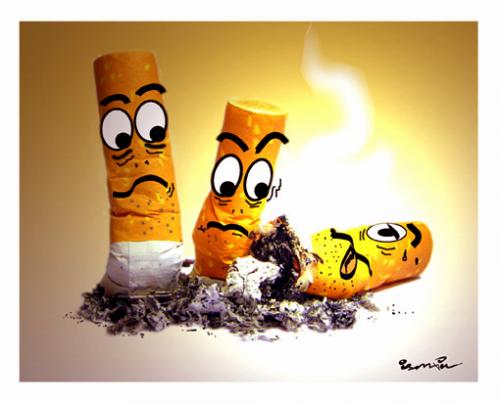
Cigarettes

Subject:  Should cigarettes be illegal?

        Cigarette use became widespread in the late 1800’s when James Bonsack created the first cigarette-making machine (History).  However, it was not until fairly recently that people discovered just how harmful smoking cigarettes could actually be to ones health.  Some see smoking cigarettes as a choice and believe banning them would be unethical while others evaluate potential risks and can’t see any benefit in their widespread use.

           According to the World Health Organization, “every 8 seconds someone dies from tobacco use” (Smokers).  However, it is a common misconception that smoking is only linked to lung cancer and heart disease.  In reality, smoking can also lead to stomach ulcers, psoriasis, deformed sperm, and hair loss.  One does not have to be a smoker to absorb the effects of cigarette smoke.  Environmental tobacco smoke (second hand smoke), contains “7,000 chemical compounds…more than 250 of these chemicals are harmful…69 are known to cause cancer”(Secondhand).  In fact there are, about 46,000 deaths from heart disease in people who are non-smokers, and “3.400 lung cancer deaths in non-smoking adults”(Secondhand).  Smoking cigarettes does not only negatively effect ones health, but also ones wallet.  In the United States, the costs of extra medical care due to second hand smoke is more than $10 billion per year (Smoking).
        The illegalization of cigarettes would have major economical effects.  According to the “Tobacco Atlas”, the profits in the tobacco industry are greater than ever.  They estimate that revenues from “the global tobacco industry are likely to approach a half trillion dollars annually”(New).  Also, there are over 800,000 people working in the U.S. tobacco industry and over 136,000 farms (History).  Banning cigarettes would leave hundreds of thousands of people unemployed across the U.S.  However, the effects of banning cigarette smoke would not only correlate to the economy but could also lead to the rise of black markets.  In a study done in U.S. prisons, when a location changed its cigarette policy it was shown that the emergence of black markets were prevalent.  This could foreshadow what may happen if cigarettes are banned everywhere in the U.S. (Smoke).
        In reality and based upon the facts, making cigarettes illegal would cause public disarray.  Discouraging one from smoking is much more attainable, and introducing new policies either to the general public or in the work force could successfully bring this idea into fruition.  Wal-Mart has recently imposed higher premiums on workers who are known smokers.  They reached this decision because “tobacco users generally consume about 25 percent more healthcare services than nontobacco users”(Abelson).  However, Wal-Mart did not stop there.  The company has started offering an anti-smoking program this year to aid employees in the process, and since then more than 13,000 employees enrolled.  Another way to discourage an individual from smoking is by using cigarette alternatives.  In Italy, Riccardo Polosa recruited 40 hard-core smokers and gave them each an e-cigarette.  The e-cigarette provides the smoker with small puffs of nicotine “without the noxious substances found in cigarettes smoke”(Tierney).  After six months, over half of the smokers cut their cigarette consumption by 50 percent and “nearly a quarter had stopped altogether”(Tierney).  Creating alternative ways to encourage smokers from picking up a cigarette does work, and with a little effort, the success seen by Wal-Mart and the creation of the e-cigarette could be a start to a smoke-free future.

Works Cited
Abelson, Reed. "The Smokers' Surcharge." The New York Times. The New York Times,
            17 Nov. 2011. Web. 04 Apr. 2013.
            <http://www.nytimes.com/2011/11/17/health/policy/smokers-penalized-with-
            health-insurance-premiums.html?pagewanted=all>.

 "History of Tobacco." History of Tobacco. N.p., n.d. Web. 05 Apr. 2013.
            <http://healthliteracy.worlded.org/docs/tobacco/Unit1/2history_of.html>.

"New Tobacco Atlas Estimates U.S. $35 Billion Tobacco Industry Profits and Almost 6
            Million Annual Deaths." N.p., n.d. Web. 08 Apr. 2013.
            <http://www.worldlungfoundation.org/ht/display/ReleaseDetails/i/20439/pid/685
            8>.

"Secondhand Smoke." Secondhand Smoke. N.p., n.d. Web. 04 Apr. 2013.
            <http://www.cancer.org/cancer/cancercauses/tobaccocancer/secondhand-smoke>.

"Smoke ’Em If You Got ’Em: Cigarette Black Markets In U.S. Prisons AND Jails." N.p.,
            n.d. Web. <http://www.ncbi.nlm.nih.gov/pmc/articles/PMC2117377/>.

"The Smokers Body." COLORS Magazine, 21 July 1997. Web. 05 Apr. 2013.
            <http://www.can.org.na/docs/smokers.pdf>.

"Smoking&Tobacco Use." Centers for Disease Control and Prevention. Centers for
            Disease Control and Prevention, 18 Dec. 2012. Web. 05 Apr. 2013.
            <http://www.cdc.gov/tobacco/data_statistics/fact_sheets/fast_facts/>.

Tierney, John. "FINDINGS; A Tool to Quit Smoking Has Some Unlikely Critics." The
            New York Times. The New York Times, 08 Nov. 2011. Web. 05 Apr. 2013.
            <http://www.nytimes.com/2011/11/08/science/e-cigarettes-help-smokers-quit-

            but-they-have-some-unlikely-critics.html>.